Can I migrate my WordPress MySQL database to a modern SQLite or PocketBase backend?
Yes — export your WordPress content, import it into PocketBase via its admin UI, and trade years of MySQL lag for instant page renders.
Yes, you absolutely can migrate your old WordPress MySQL database directly into a faster, modern SQLite or PocketBase backend. VeloCMS makes this swap practically painless by allowing you to export your legacy content and pipe it straight into your new lightweight database environment.
Why should I ditch WordPress for PocketBase and VeloCMS?
Let's be honest, wrestling with a traditional WordPress setup can start to feel like a full-time job. You are probably used to constantly updating plugins just to keep your site from breaking, all while paying top dollar for bloated hosting plans that struggle under traffic spikes. Moving to VeloCMS changes the game entirely. Since this platform is built on a Next.js frontend and a PocketBase backend (which is essentially SQLite on steroids!), you end up with an AI-first blog setup that feels remarkably different. You get to drop the heavy, sluggish MySQL baggage that slows down page renders. Instead, your site becomes incredibly fast, locked down securely against the usual exploits, and remarkably cheap to run. When you remove the endless database queries required by older content management systems, your pages load in an absolute blink. It just works, letting you focus entirely on your writing.
How do I actually move my content over?
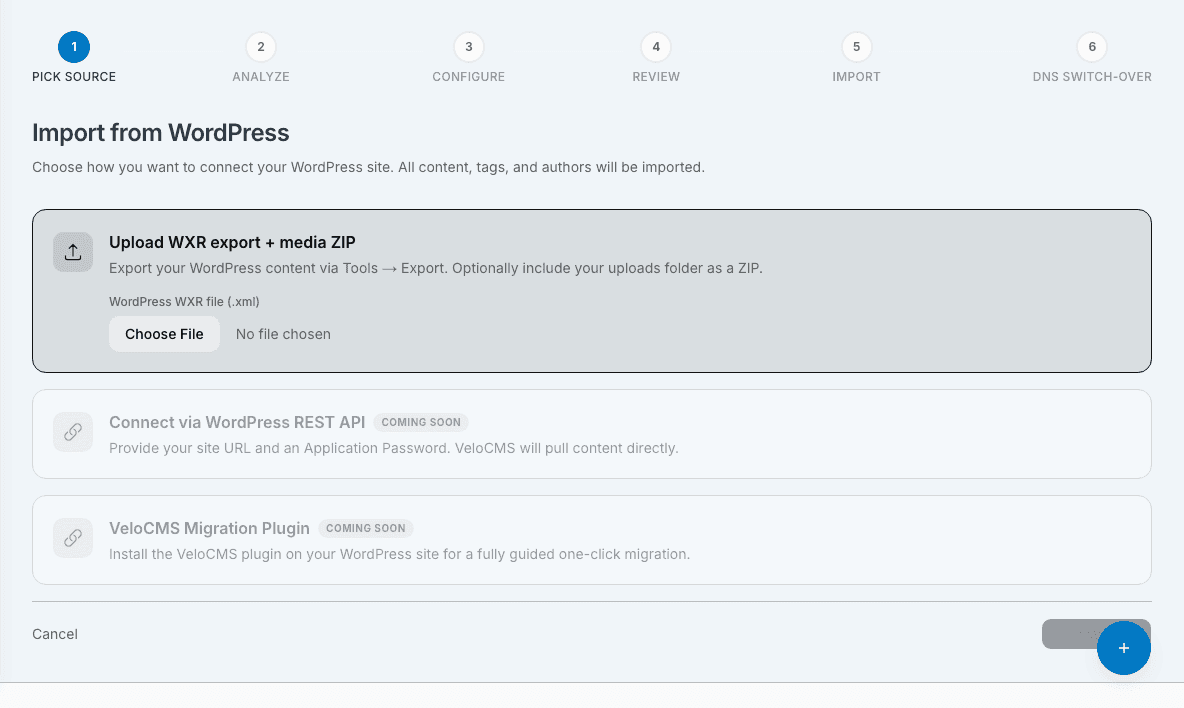
Here is where things get a bit hands-on, though it is far easier than it sounds. You definitely won't need to write a massive custom database migration script to pull this off. Your first move is to grab a free export plugin from your old WordPress dashboard. Use it to download all your published posts, drafts, and pages as a simple JSON or CSV file. Once you have that file sitting safely on your local machine, head straight over to your new PocketBase admin UI. You will create a fresh 'posts' collection and rely on the built-in import utility to map your old titles, URL slugs, and body content right into the new system. (Pro tip: always double-check your date formatting before hitting the final import button, because WordPress sometimes spits out weird timestamps that need a quick tweak in Excel or your code editor to match PocketBase's strict expectations). Spending five extra minutes on that little bit of data prep saves you a massive headache later on.
What happens to my old media files and SEO?
Nobody wants to lose their hard-earned Google rankings or end up staring at a website full of broken image icons after moving platforms. Thankfully, your SEO juice is perfectly safe here. Because VeloCMS gives you total, unopinionated control over your Next.js routing, you can easily set up permanent redirects in your configuration file. This catches any old WordPress permalinks and points them gracefully to your shiny new URLs. As for your actual pictures, you have a couple of solid options to keep things intact. You can bulk download your entire wp-content folder and upload those assets straight into your local PocketBase storage. Alternatively, if you have a massive media library, you could hook up an external bucket like AWS S3. PocketBase handles these file relationships beautifully behind the scenes. Once you relink those images in your new database, your blog will look exactly as it did before. The only difference is that it won't take five agonizing seconds to load a single post.
Taking the leap from a legacy MySQL setup to a sleek, modern PocketBase backend might sound a little intimidating at first glance. Still, once you actually get your hands dirty with the transition, you will probably wonder why you didn't make the switch sooner. You are effectively trading away constant maintenance and frustrating database lag for a modern, AI-powered writing experience that stays entirely out of your way. Set aside an afternoon this weekend, pull down your WordPress export, and give the VeloCMS setup a proper spin.
Run a free technical SEO, performance, and migration-readiness audit — no signup required.Audit my site